
Supreme Court hears high-stakes arguments on use of race in redistricting
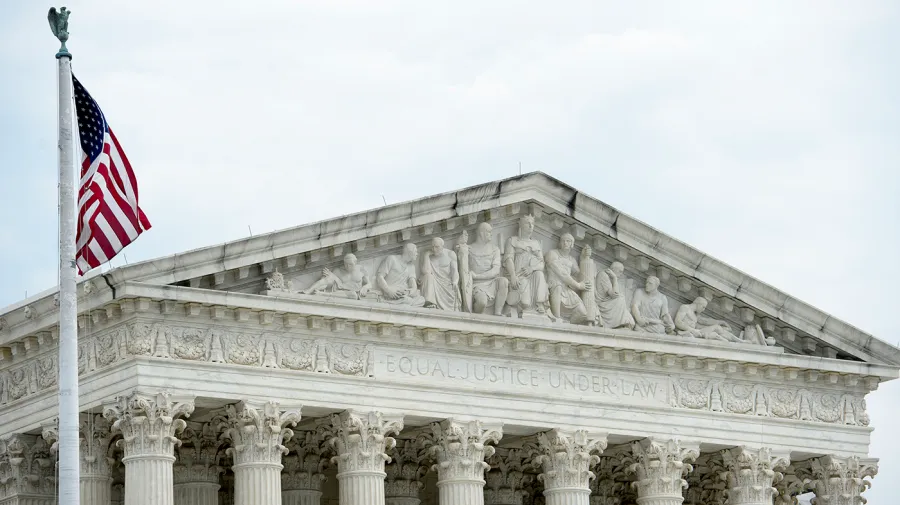

The Supreme Court will hear arguments on Wednesday in a blockbuster case over whether states can consider race in redistricting.
The battle over Louisiana’s congressional map has brought the court to the verge of curtailing a central provision of the 1965 Voting Rights Act that has forced states to draw majority-minority districts.
Justices will consider whether the practice complies with the 14th and 15th amendments, which were ratified after the Civil War to provide equal protection under the law and prohibit intentional racial discrimination in voting.
“Our Constitution does not tolerate this abhorrent and incoherent system, and Louisiana wants no part of it,” Louisiana wrote in court filings.
The Republican-led state begrudgingly added a second majority-Black congressional district to comply with Section 2 of the Voting Rights Act, after a lower court struck down a design with only one.
The Supreme Court is hearing arguments about the map for a second time, now with higher stakes that could include reexamining decades-old precedents on the landmark law.
It has led Louisiana to abandon defending its map. The state is now aligned with a group of “non-African American” voters who challenged its map and the Trump administration, all of whom contend the high court needs to rein in Section 2.
It’s an argument they hope will land with the Supreme Court’s conservative justices, several of whom have signaled race-based redistricting may not be constitutional. Wednesday’s argument comes before the backdrop of the court’s blockbuster decision eliminating affirmative action in higher education.
“Too often, Section 2 is deployed as a form of electoral race-based affirmative action to undo a State’s constitutional pursuit of political ends. That misuse of Section 2 is unconstitutional,” Solicitor General D. John Sauer wrote in court filings.
The long-running legal battle over Louisiana’s map began after the 2020 census, when the state’s Republican-controlled Legislature overrode a former Democratic governor’s veto of a map with one majority-Black district.
Black voters and civil rights groups sued. They claimed that the design diluted Black voters’ power at the polls.
A three-judge panel agreed, and the Supreme Court temporarily let the map stay in place ahead of the 2022 midterms, before throwing out Louisiana’s appeal after deciding a separate redistricting case in Alabama.
To avoid court-drawn boundaries, Republican leaders in the state took action.
They passed a new map with a second majority-Black district. Self-described “non-African American” voters then challenged it, which a three-judge panel invalidated, sending the case back to the Supreme Court.
The map remained in effect for last year’s elections, but the Supreme Court’s decision could cause a major shake-up for future terms.
With Louisiana and the “non-African American” voters now aligned, they’ll square off against the Black voters and civil rights groups from the earlier litigation, who will urge the Supreme Court to preserve Section 2 in its current form.
The voters called the state’s argument a “burn-it-all-down approach” that would eliminate judicial scrutiny of the state’s voting maps and effectively turn back the page to the widespread discrimination that existed before the Voting Rights Act.
“It was an era ‘blind’ to race only in the sense that obvious, widespread discrimination went unaddressed by Congress and courts. We cannot afford a return to such a blinkered past,” they wrote in court filings.
Louisiana Gov. Jeff Landry (R) told The Hill in an interview that courts should stay out of redistricting, a process that’s political in nature and should fall to elected representatives.
“What you’ve seen is that the more the court gets involved in a legislative process, the more it entangles itself in its own opinions,” Landry said. “Because what has happened is, each time it’s had to render or address an opinion based upon redistricting, it’s only complicated the process even further and ended up with a different series of litigation.”
He said he wants the Supreme Court to end the dispute entirely, so Louisiana can stop “needlessly” spending tens of millions of dollars on litigation tied to redistricting.
“I hope that this is the end of the tracks,” he said.